• Home
  • Clinical Evidence
    • Key Studies
    • ClotHound Testing
    • DogLeg 24F Testing
    • Radial Force Testing
    • Gravity Filtration
    • Blood Filtration
  • Governance
    • Management Team
    • Board of Directors
  • More
    • Home
    • Clinical Evidence
      • Key Studies
      • ClotHound Testing
      • DogLeg 24F Testing
      • Radial Force Testing
      • Gravity Filtration
      • Blood Filtration
    • Governance
      • Management Team
      • Board of Directors
  • Home
  • Clinical Evidence
    • Key Studies
    • ClotHound Testing
    • DogLeg 24F Testing
    • Radial Force Testing
    • Gravity Filtration
    • Blood Filtration
  • Governance
    • Management Team
    • Board of Directors
Clinical Evidence Study Summary

Bench radial force testing of the wire sphere

The expandable wire sphere pushed on the vessel wall with at most 22 N of force, far below the force reported to rupture the saphenous vein and pulmonary artery.

Key Results

22 N

No difference

5-10 mm

 Maximum radial force the expanded wire

sphere put on the test cylinder.

5-10 mm

No difference

5-10 mm

 Vessel sizes tested. Force rose as the diameter increased.

No difference

No difference

No difference

 In force whether the device was delivered along a straight or winding path.

What We Tested

How hard does the sphere push on the vessel wall?

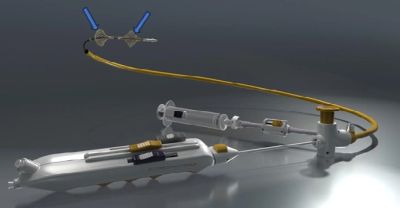
Retriever Medical's thrombectomy device for DVT and PE uses two wire spheres that the user expands, collapses and moves by hand. An earlier pig study found no vessel wall damage, even with the spheres expanded to 200% of vein diameter.


This study measured the radial force, the outward push on the vessel wall, when a sphere Is expanded. Knowing it helps judge the risk or rupturing a vessel during use.
How We Tested It

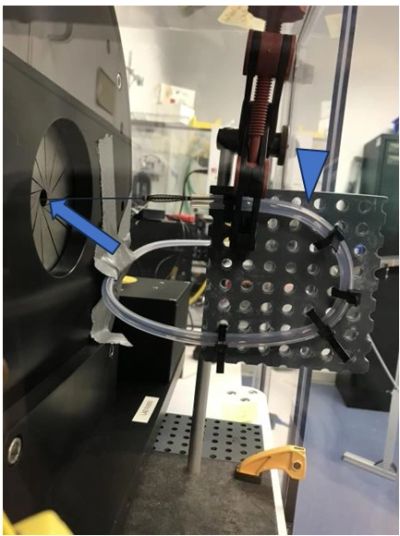
A radial force tester and two delivery paths.

  • Tester: the collapsed sphere was placed in an MSI RX650 Radial Force Tester, which has an adjustable iris that acts like a vessel.
  • Three sizes: the iris was set to 5 mm, 7.5 mm and 10 mm. At each size the sphere was expanded until the force leveled off.
  • Straight path: the device was first delivered along a straight course.
  • Winding path: It was then delivered through a 180 degree bend (4 cm radius) and a 90 degree bend (8 cm radius).
What We Found

Low force, well under rupture levels.

The expanded sphere produced at most 22 N of radial force. Force went up as the iris diameter went from 5 mm to 10 mm. The straight and winding paths gave no significant difference in force.


Published burst pressures for the saphenous vein and pulmonary artery are far above the sphere's force, so vessel rupture during use is highly unlikely. With the earlier pig study, this adds support for the device's safety profile.

Read the Full Report

The full published paper

Preview the first page below, or download the PDF (5 pages, about 1.0 MB).

Download the PDF

More Evidence

ClotHound Testing

DogLeg 24F Testing

DogLeg 24F Testing

In live porcine, the ClotHound spheres were expanded 20-40% beyond vessel diameter and moved back and forth without significant damage to the vessel lining.


Read the summary

DogLeg 24F Testing

DogLeg 24F Testing

DogLeg 24F Testing

 The 24F aspiration/guide catheter (7.1 mm ID) tracked through serial 90-180 degree turns with no lumen collapse at a 6 mm radius of curvature.

Read the Summary

Gravity Filtration

Gravity Filtration

Gravity Filtration

 A gravity-fed three-filter system removed 100% of test particles from a blood analogue, at more than 500 cc per minute.

Read the summary

Blood Filtration

Gravity Filtration

Gravity Filtration

  Filtered bovine thrombus left no residual clot, and filtered porcine and human blood

showed no sign or red blood cell injury or change in clotting profile.

Read the summary

Copyright © 2026 Retriever Medical - All Rights Reserved.

Powered by

This website uses cookies.

We use cookies to analyze website traffic and optimize your website experience. By accepting our use of cookies, your data will be aggregated with all other user data.

Accept